My Abstract Process From First to Last Stroke
Let the painting begin!
The freedom and the journey are what I love most about abstract painting. Sometimes I begin by painting a solid color as the base on the canvas, other times I begin with a white, raw canvas. For me, it's all based on my feelings and inspiration. There are no rules in my studio. It energizes me no matter if I'm facing a tiny 3x3 miniature or a massive 30x40 canvas—I need that exact same spark to begin.
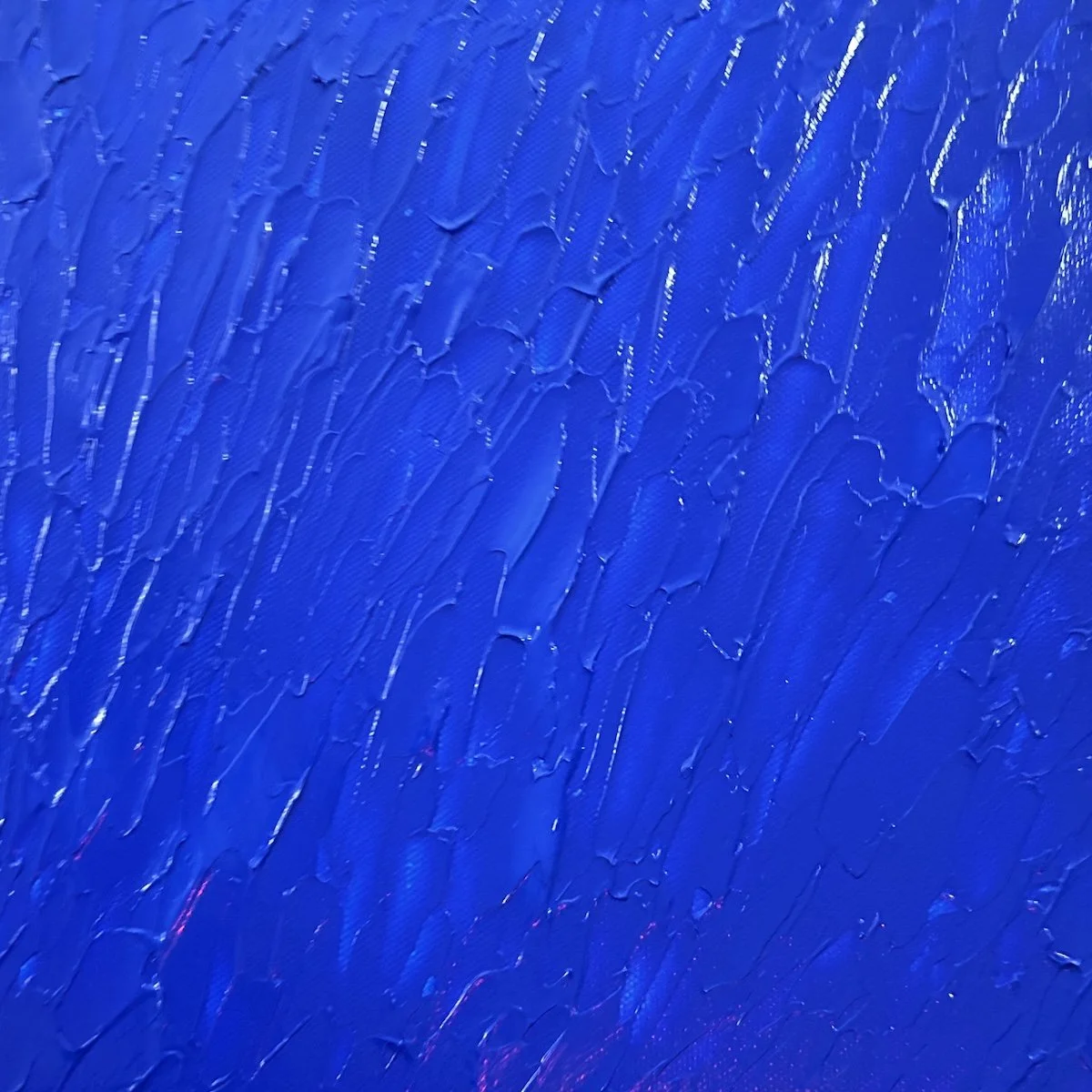
When I started this painting, all I knew was that I wanted to begin with blue water with no end in sight. You can see hints of the hot pink color I blended into the blue. This is an example of beginning with a solid color background of acrylic paint blended with gloss gel.
Finding the rhythm in the raw texture
Once that initial choice is made, the first layer is all about pure momentum and intuition. I treat the canvas like a blank stage and approach it as an improv show. Occasionally I’ll have a suggestion from the “audience”, which is an emotion, thought or idea I want to base the painting around.
I choose my colors and begin. Gels, both gloss and matte, are my best friends. I love working with them, so I incorporate them in the majority of my paintings. After I’ve laid down a base—freestyle or solid color—I decide what’s next. This is when I begin mixing paint with gels and building layers. It’s pure joy for me to see them on the canvas. I use brushes and palette knives, a metal fork, q-tips, toothpicks, stuffing from a pillow, and whatever I think will be fun to try to discover new patterns I can create on the thick gels. Sometimes it’s a major fail and I hate the impression, but I can easily smooth it over and begin again—never to be seen again!
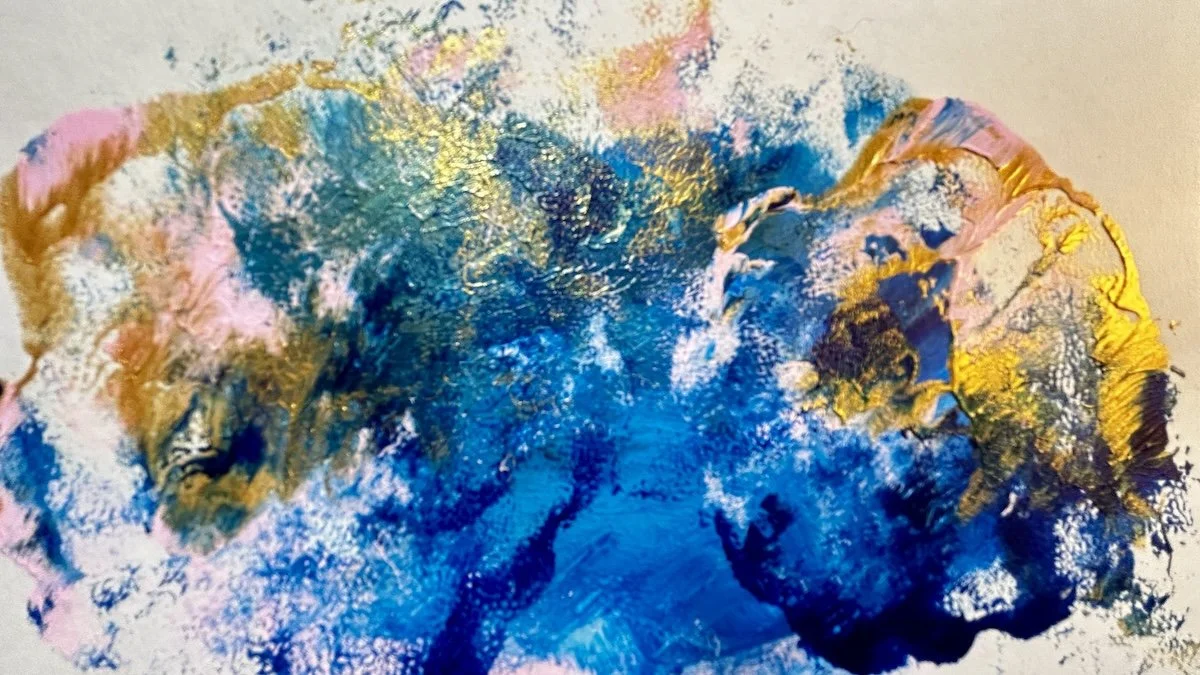
For this piece, I started on a raw white canvas. To create the background coat, I placed plastic wrap over dollops of paint, pressing and guiding the colors across the canvas to blend them.
Stepping back to let it speak
The most critical part of my process actually involves putting the brush down, letting it dry, and looking at it as a whole. I love to sit back, chill out, and spend time living with the canvas while it’s in its raw, mid-way state.
I’ll look at the shapes emerging from the layers and figure out what the painting is trying to say. Once the path becomes clear, I go back in with deliberate control—sharpening lines, adding metallic accents, or dropping in finer details to anchor the composition. A piece is only finished when that initial chaotic freedom and the final, deliberate details find a perfect balance. It’s a wild, unpredictable journey every single time, but that escape is exactly why I do it.
xx,
Heather
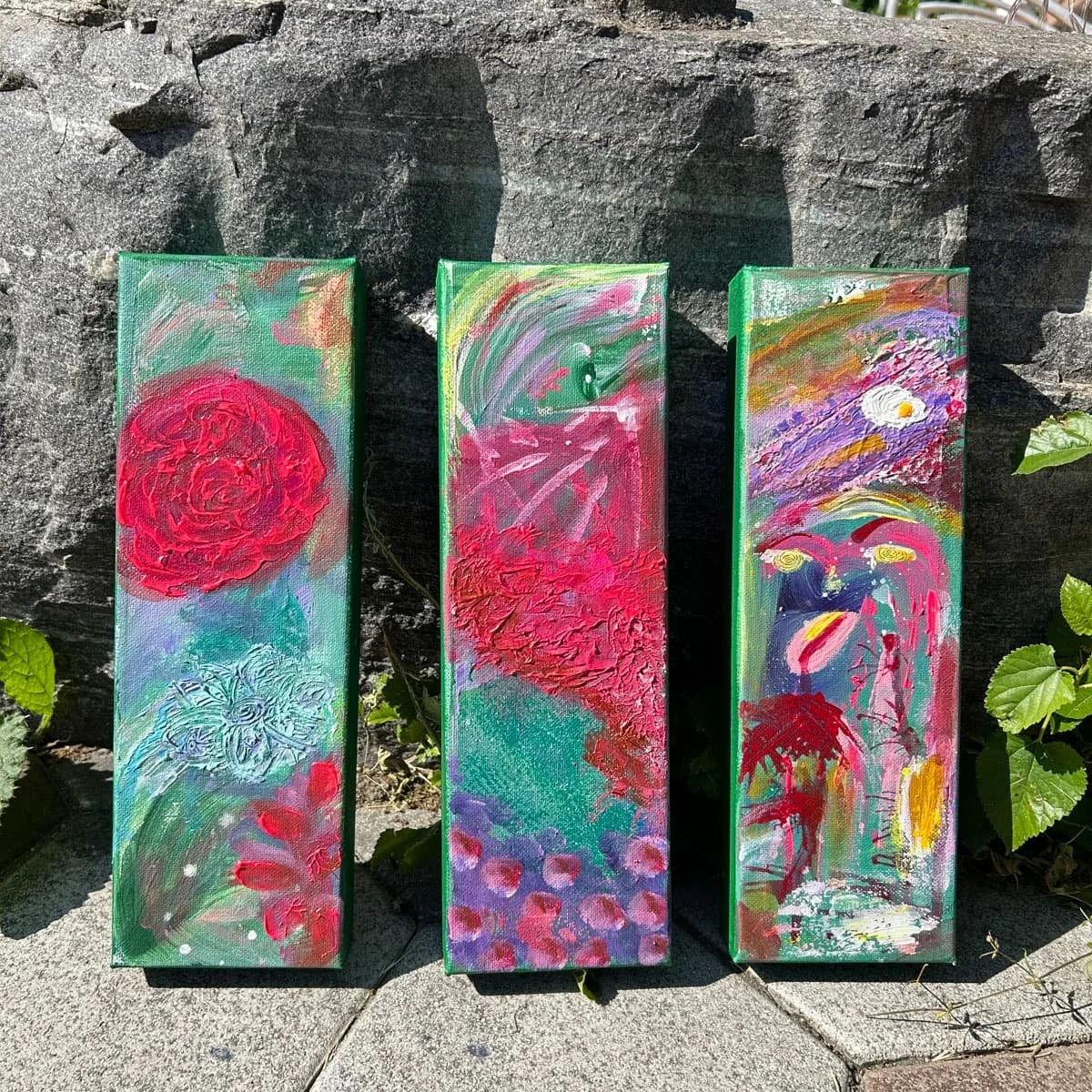
In this triptych I’ve used both gloss and matte gels to demonstrate different states of mind. This piece is called Your Brain on Drugs.